|
Year(s)
|
Name |
Pieces |
Comments |
| 1936-1938 |
Z1 |
1 |
First machine in the world with: a binary floating point processor, binary logic, parallel working devices, freely programmable, separation of memory, control unit, arithmetic unit, input/output devices. Bistable mechanical building blocks, 64 words (each containing 22 bits). Not a stored program computer. Worked unreliably. |
| 1938-1939 |
Z2 |
1 |
Fixed point arithmetic, 800 relays, 16 bits binary fixed point processor, mechanical memory, test model for relays. Not a stored program computer .Worked reliably. |
| 1940-1941 |
Z3 |
1 |
First working computer in the world with: binary logic, powerful binary floating point processor, arithmetic exception handling, 2400 relays, 64 words (each containing 22 bits), separation of memory, control unit, arithmetic unit, input/output devices. Not a stored program computer. |
| 1942-1945 |
Z4 |
1 |
Successor of the Z3, but with a mechanical memory of 64 words (each containing 32 bits), 2200 relays, binary floating point processor, arithmetic exception handling, extended in 1949 for the ETH-Zürich from 1950-1955: conditional branch, call of subprograms (second punch tape reader), MERCEDES output device. Not a stored program computer. |
| 1942 |
S1 |
1 |
Special computer for measuring the surface of wings of airplanes, hardware wired program, 600 relays, binary principle, 12 bits word length, destroyed 1944. Not a stored program computer. |
| 1944 |
S2 |
1 |
Improved version of the S1, automatic scanning of wings with about 100 clock gauges, hardware wired programs, destroyed in 1945. Probably the first process computer in the world. Not a stored program computer |
| 1950-1952 |
Z5 |
1 |
Mandated by Leitz / Wetzlar (for optical calculations), extension of the Z4 with many punch tape readers and a punch writer, six times faster than the Z4, binary principle, floating point arithmetic, 32 bit words, biggest relay computer in Germany, first commercial computer in Germany, 300,000 DM. Not a stored program computer. |
| 1951-1955 |
Z7 |
30 |
Calculating punches, mandated by Remington Rand, 30 pieces, called Remington M9. Not a stored program computer. |
| 1955 |
Z11 |
38 |
Used for consolidation of farming, hardware wired programs, later freely programmable, floating point processor, easily to use by pressing buttons, 120,000 DM in 1960. Not a stored program computer. |
| 1957 |
Z22 |
50 |
First electronic computer of the Zuse KG, 38 bit words, fixed point arithmetic, minimal principle, magnetic drum containing 8,192 words, first stored program computer of the Zuse KG, very successful, 180,000 DM. |
| 1961 |
Z23 |
87 |
First transistor computer, same logic as the Z22, three times faster than Z22, 40 bit words, very successful. Stored program computer. |
| 1963 |
Z25 |
105 |
Small and very flexible computer, 18 bit words, process control in companies, many peripheral devices, 98,000 DM. Stored program computer. |
| 1961 |
Z31 |
7 |
Parallel development to the Z23, designed for commercial applications (such as banks), decimal arithmetic unit, too expensive and too large, flop for the Zuse KG. Stored program computer. |
| 1958 |
Z64 |
85 |
Drawing machine with high accuracy (1/20 mm), controlled by punch tapes, used for graphical representation and in the optical industry. |
| 1965 |
Z43 |
>100 |
Modern transistor computer, TTL logic. Stored program computer. |
| Table 1: A list of the computers produced by Konrad Zuse and the Zuse KG from 1936-1969. The rebuilt Z1 stands in the Deutsche Technik Museum in Berlin-Kreuzberg. The rebuilt Z3 and the original Z4 are on display in the Deutsche Museum München. The Z11 computer can be visited in the Heinz Nixdorf MuseumsForum in Paderborn, which is the greatest computer museum in the world. The Z11 also can be visited in the Deutsche Technik Museum in Berlin, where a Z23 and Z64 can also be seen. The Z22 is on display in the Deutsche Museum München and in the Stadt- und Kreisgeschichtliche Museum in Hünfeld, where the city Hünfeld shows some of Konrad Zuses computers, including the Z22, Z23, Z25, and Z64. In Hoyerswerda, where Konrad Zuse lived from 1924-1928, a Z22, which is still working, will be installed in the living house of his parents. In September 1999, a Z23 will be shipped to Silicon Valley (Boston Computer Museum). |
|
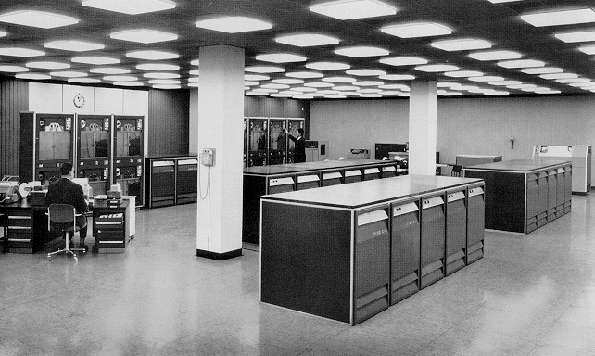
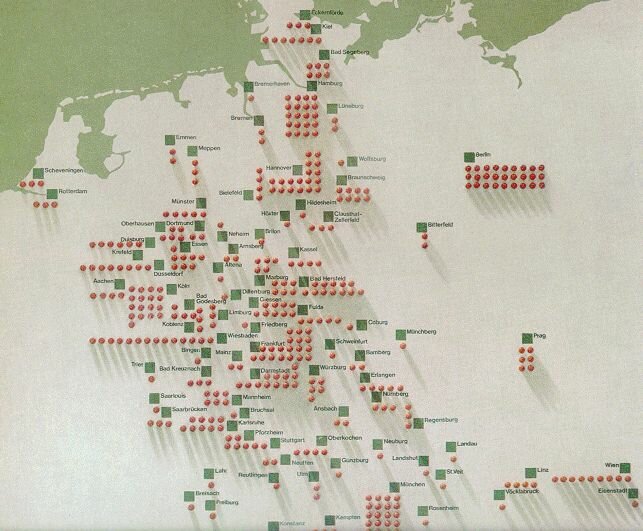
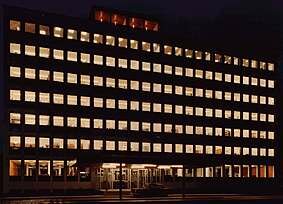
| From my perspective, the story of the Zuse KG is a fascinating one. From 1949 to 1969, the Zuse KG produced about 250 computers with a value of 100 Million DM. Although the Zuse KG had orders of more than 25 Million DM in 1964, and the expected gross revenues were close to 40 Million DM, it was impossible for Konrad Zuse to keep the Zuse KG as his own company. From its founding in a back yard in the small village of Neukirchen (Kreis Hünfeld) in 1949, the Zuse KG grew to be a very creative computer company until 1969 (owned and controlled until 1964 by Konrad Zuse). |
|
|
|
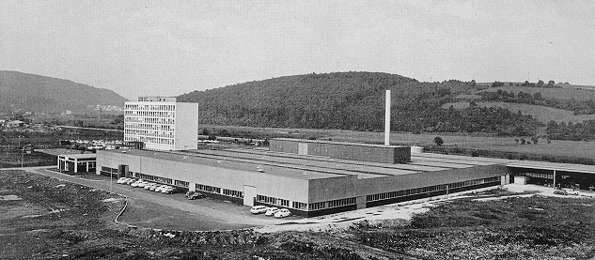
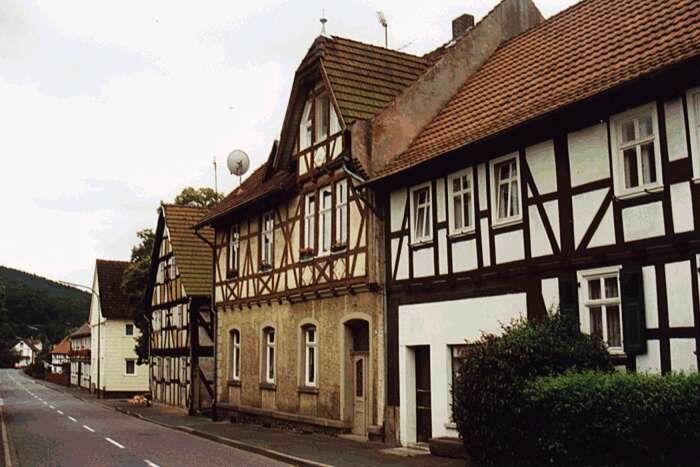
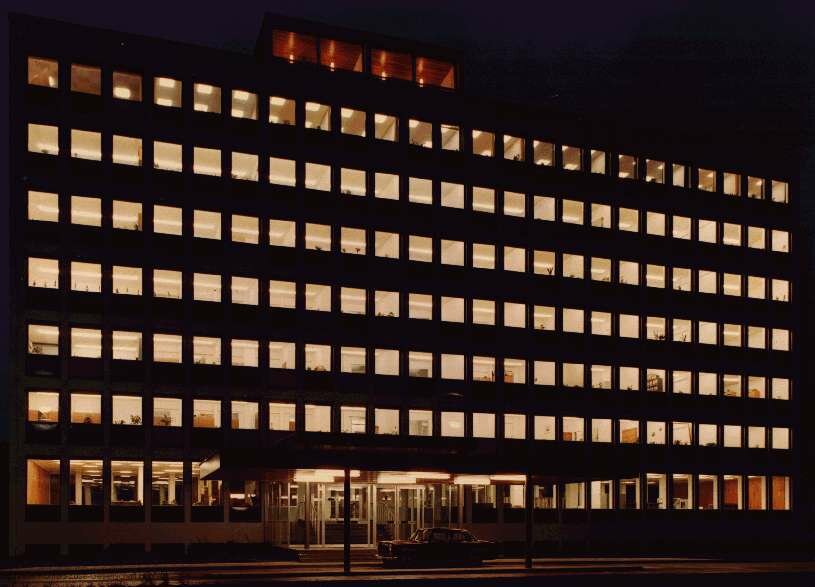
| Fig.89 (Left). The Zuse KG started with five employees in Neukirchen in 1949. Fig.90 (Right). The Zuse KG grew up to be a modern computer company in Bad Hersfeld (15 km north of Neukirchen) with about 1200 employees in 1964. Konrad Zuses office was on the top of the building (red color). |
|
| From my point of view, Konrad Zuse was not a collapsed entrepreneur. Konrad Zuse and his company was years ahead of his time in designing computers, producing computers, drawing machines controlled by computers, and ideas related to computers. |