In 1957, the Zuse KG started to build electronic computers (based on vacuum tubes), commencing with the Z22. The jump in machine numbers from the Z11 to the Z22 signified the change of technology, and the Zuse KG needed a long time to construct its first electronic computer.
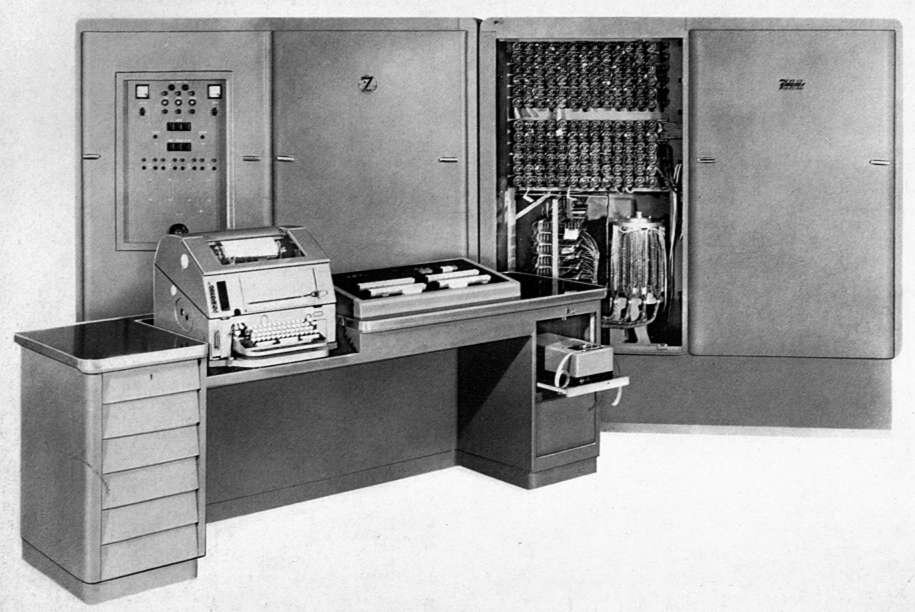
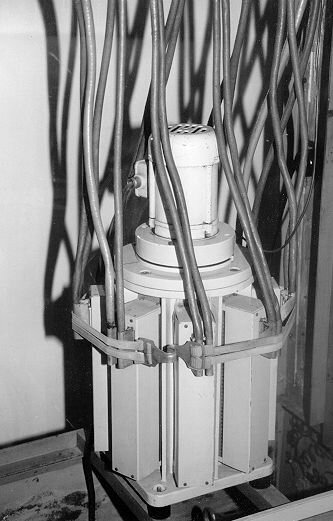
Fig.80 (Left). The Z22 computer was the Zuse KG's first machine built using vaccuum tubes.
Fig.81 (Right). The Z22s 8KB magnetic drum.
Unfortunately, the Zuse KG was a financially weak company. The major reasons for this were the post war situation and the status of Konrad Zuses patents, where the latter were not resolved until 1967. Konrad Zuse hesitated a long time to use tubes for computers. The reason was the unreliability of tubes at this time. Konrad Zuses goal was to build reliable computers for engineering and scientific tasks. He did not want to build research computers, like the G1 in Göttingen. He wanted to proceed with his idea of freeing the human spirit free from stupid calculations.
The result was that, for a long time, Konrad Zuse trusted reliable relay techniques more than vacuum tubes. Another reason was that Konrad Zuse wanted to avoid any financial risk for the company with unreliable computers. Still, in 1954 the electronic research computer G1 in Göttingen sometimes worked three to four days without problems when the machine was in a good shape (but only five minutes if there were sporadic errors). For Konrad Zuse was this not acceptable. However, in 1955, the time for relays was over. The Zuse KG designed the Z22 without any sponsoring, but the machine was based on the computer concepts of Theodor Fromme and H. Pösch. Their concepts were in turn based on those of Willem Louis van der Poel [POEL62] from Holland. This was an managment decision of Konrad Zuse. This machine combined a universal usability with a minimum of effort for the hardware. The machine used very simple instructions, and multiplications, floating point operations, and so forth were realized using subprograms. Two earlier machines called the Z20 and the Z21 were planned based on these concepts, then the Z22 was constructed and given the name Minima. The Z22 was a very flexible machine, and its price of 180,000 DM was much lower than for machines built in foreign countries. The Zuse KG received an advance payment by the Technische Hochschule Berlin and Aachen in order to produce the Z22. For the magnetic drum a license agreement was made with Gerhard Dirks, who was another computer pioneer in Germany and also in the US. By 1958 the Z22 worked properly and in the same year 18 machines were sold.
The Zuse KG underwent another large change in 1957. The rooms available in Neukirchen had become too small, so the company moved to Bad Hersfeld, which is about 15 km north of Neukirchen. At this time, Bad Hersfeld had around 25 000 inhabitants.
By 1961/62, more than fifty Z22s had been sold. Today, two fully working Z22 machines can be visited in the Fachhochschule Karlsruhe and in the Bundesministerium für Bildung und Wissenschaft.
The Z23 Computer
The development of computers grew faster and faster. The transistor was now well known, and in 1959 the Zuse KG developed the Z23, which was a powerful transistor computer with almost the same logic as the Z22. The Z23 replaced the Z22 in 1961/62.
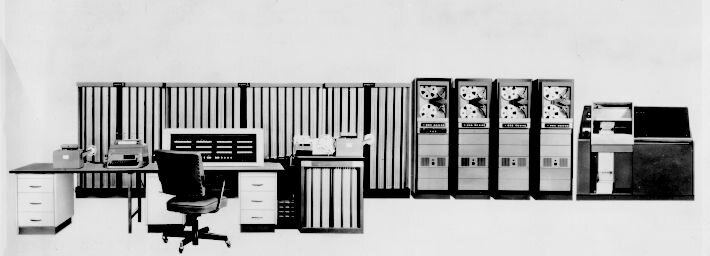
Fig.82. The Z23 had a similar structure as the Z22, and was the first computer with transistors.
The performance of the Z23 was much better than that of the Z22. The first Z23 machine was delivered in 1961. This machine had a ferrite core memory of 240 words (each containing 40 bits), a magnetic drum that could store 8,192 words (each containing 40 bits). The Z23 was three times faster than the Z22, and programs written for the Z22 could run on the Z23 without any conversions.
The Z23 was a very successful machine and, by January 1, 1967, ninety-seven machines had been installed in Germany.
The Z31 Computer
The Z31 was developed in parallel with the Z23. This was the Zuse KGs first computer to contain a decimal arithmetic unit, and it was especially designed with banking and commercial applications in mind. Fig.83 shows a Z31 from 1962.
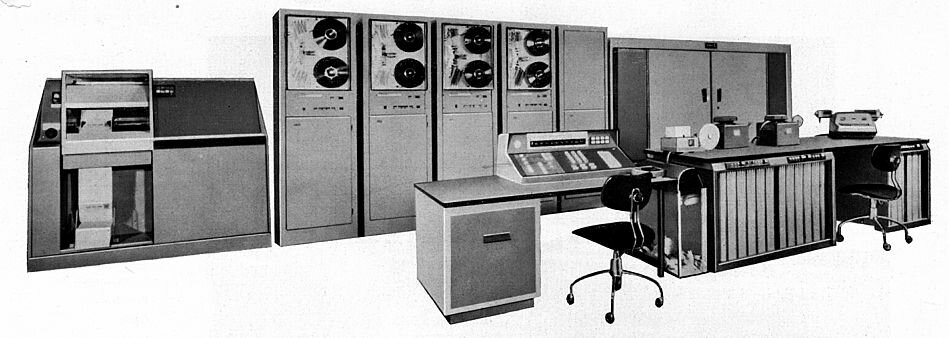
Fig.83. The Z31 machine was the Zuse KGs first decimal computer.
The Z31 cost a great deal to develop, but only seven machines were sold. This was a very expensive management mistake, and the Zuse KG got deeper and deeper into financial trouble.