|
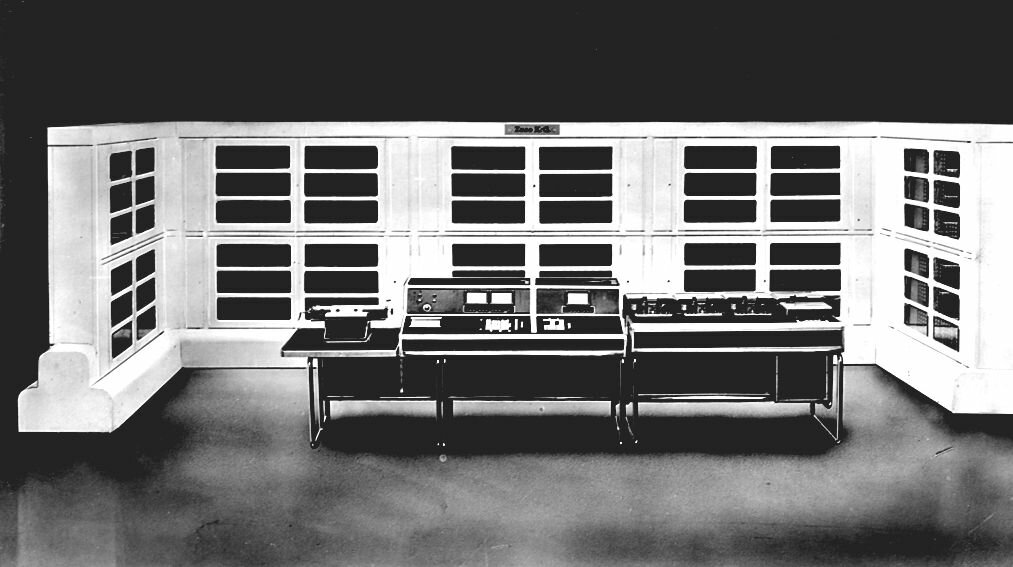
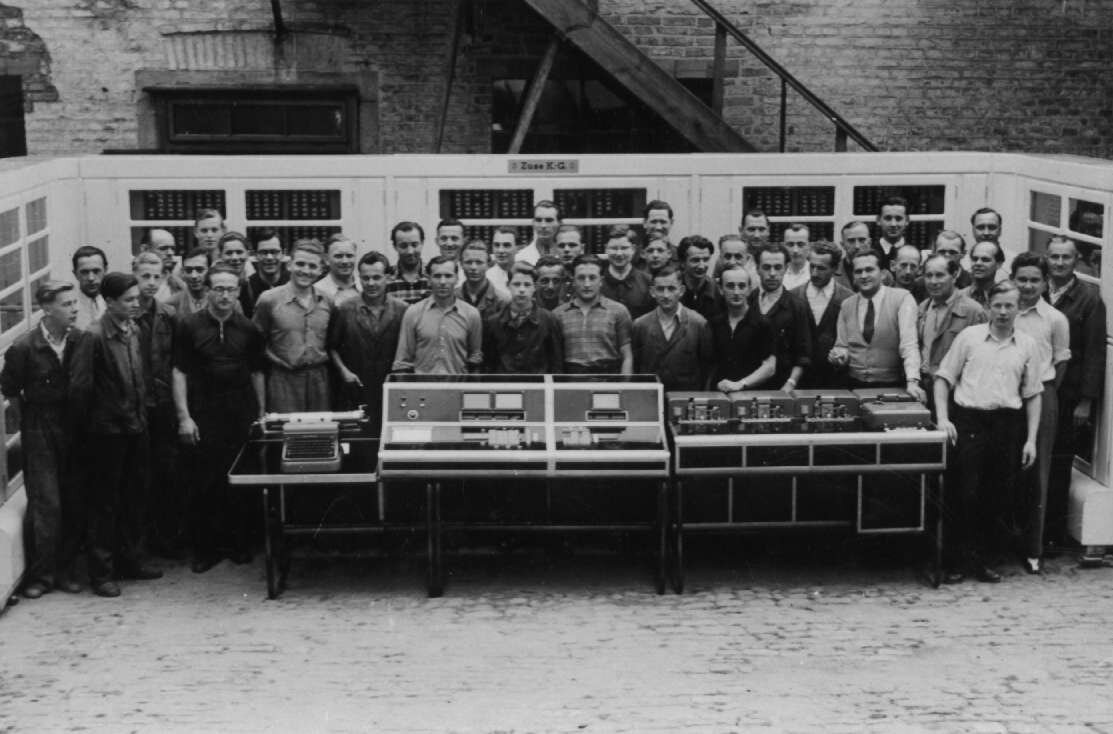
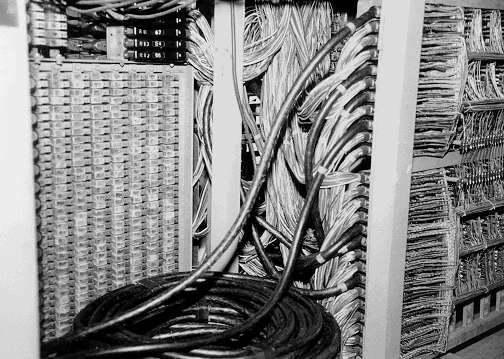
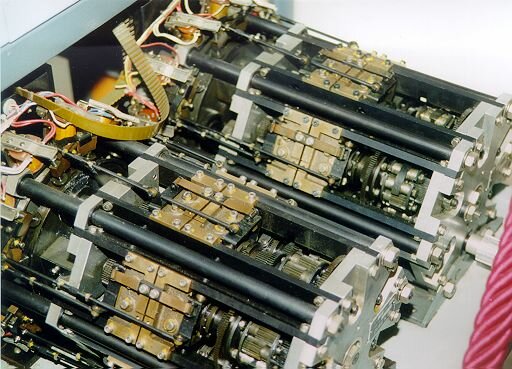
For the Z5, Konrad Zuse used 2,800 uniform modern telephone relays in order to overcome the bad reliability of vacuum tubes. The machine itself occupied an area of 10 meters by 4.5 meters, while the input and output devices required 2.5 meters by 4.5 meters. The Z5 was the first commercial computer ever built in Germany (probably in Europe) and delivered to a company in Germany. Also, the Z5 was the greatest relay computer ever constructed and delivered in West-Germany (in 1955 the OPREMA, which used 17,000 relays, was constructed in East-Germany).
The Z5 was six times faster than the Z4, had a twelve word memory (each containing 35 bits, so floating point numbers were represented using 1 bit for the sign, 7 bits for the exponent, and 27 bits for the mantissa), and a special memory to store eight constants (such as: +0, +1, +10, +Pi, +1/3, + 1/5, +1/7, +220). The Z5 was a three address machine and had a clock frequency of about 40 Hertz.
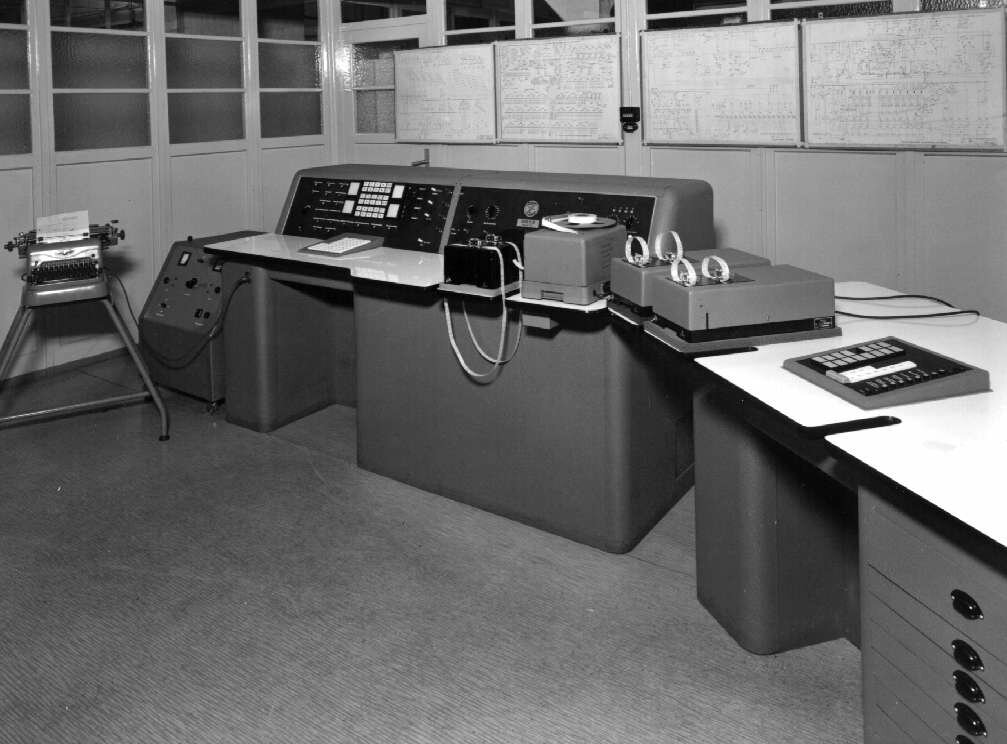
It is important to note that the Z5 was not a stored program machine, because the program was not stored in the memory along with the data. Instead, the Z5 employed a sub-program technique realized using three punch tape readers (based on 35 mm standard movie film), which were activated by each other. The punch tape readers read twelve 20-bit combinations per second (instructions and/or floating point numbers).
Although the memory was very small, it was possible to perform the complicated calculations of the numerical methods required for optical lens systems. The execution times were 0.1 seconds for an addition, 0.4 seconds for a multiplication, 0.75 seconds to perform a division or a square square root, 0.05 seconds to multiply a floating point number with a constant, and 0.4 to 1.4 seconds to convert a floating point number into its decimal equivalent, or vice versa. The calculation of the root of an algebraic equation of the 8th degree took around 38 seconds, and the calculation of a determinate of the 4th degree took around 15 seconds.
However, the Z5 was the only big mandate that the Zuse KG got between 1949 and 1955. At this time, 300,000 DM was a large amount of money. The monthly income of a typical family was less than 200 DM. After the Second World War, the situation in Germany and Europe was very difficult. Up to 60% of Germany was destroyed and the capacity of the German economy was less than 20-30% compared to 1939. Thus, companies simply didnt have enough money to buy computers. For this reason, Konrad Zuse tried to make some business with US companies. He successfully concluded a contract with the Remington Rand Corporation, which meant he could sell about 50 small relay machines (Z7-Z9). With the exception of the G1 research computer in Göttingen by the team of Billing, and the institutes in Darmstadt and München, the German government did not support institutions for buying computers until around 1955.
The Z11 Computer
|
| Although the situation in Germany was very difficult, in 1954 the Zuse KG constructed the Z11 as a successor of the machine SM1 (1952-1954), which was developed by Seifers in München for consolidation of farming purposes. The Z11, which had a clock frequency of 40 Hertz, was very popular because of the easy handling by the hardware wired(9) programs. These programs solved calculations in the area of consolidation of farming by pressing simple buttons. |
|
(9)Hardware wired programs are implemented using relays and stepwise relays. The stepwise relays select micro-sequences of algorithms implemented with relays. Freely programmable machines whose programs are stored on a punch tape or a punch card are much more powerful than hardware wired programmed machines. |