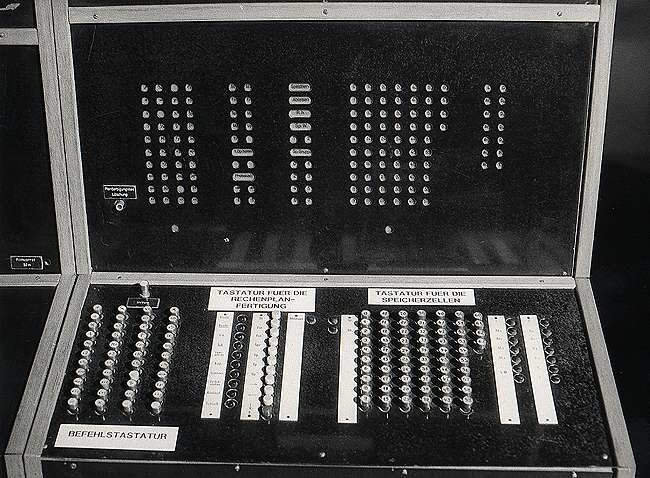
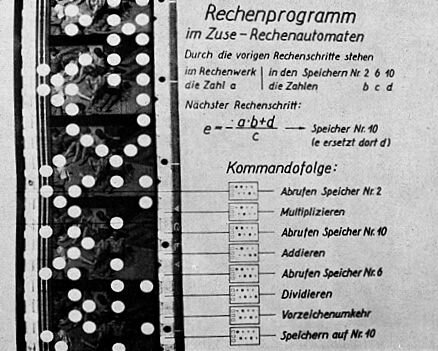
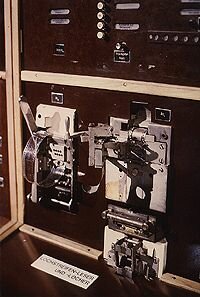
All these specifications of the Z4, as seen in 1949, were very convincing for Stiefel,Rutishauser and Speiser. It must be borne in mind that at this time there were hardly a dozen program-controlled computers in operation, all of them in US. Less than a handful were in use for research in numerical mathematics, the others performed routine calculations. There were no doubts that Z4 could be used for serious mathematical research.
When the Z4 machine was installed, significant work started almost immediately. Within a few years Zürich rose to be one of the foremost centers in numerical analysis. ... The creative spirit that was ever-present, the continuous expression and evaluation of new ideas, the thoroughly based academic knowledge and the sound scientific judgment were daily realities, I am almost tempted to say: This was the air that we were breathing. I can hardly believe, that Stiefel, when he decided to acquire the Z4, would have dared to hope for success of this degree!
The Z4 was also extensively used in education. As early in 1951, we offered to students a course in computer programming with practical exercises on the machine. We believe we were the first on the European continent to do so. This should be taken in consideration by those who often criticize that Swiss Universities were late in recognizing the importance of informatics.
The situation in Germany in the early 50s is worth being commented. While the Z4 was installed and operated in Zürich, there were three computer projects under way in West Germany: Darmstadt, München, and Göttingen. Their interest in the Z4 was only moderate, to put it mildy. To understand this attitude one must take in account the fundamental difference in priorities: Stiefel had the desire to have computing power at his disposal as fast as possible, even if it was modest. The three German groups on the other hand had the ambition to build electronic computers with advanced technology; they were under less pressure from the side of a computer-hungry mathematician. But when the scientific results started to flow out of Zürich in 1951 and 1952, there was some criticism voiced in Germany saying the Z4 should have been kept at home rather than let it go abroad.
To me, and now in the light of retrospect, the explanation of what happened is quite clear: Universities in 1950 were still suffering from the effects of the war. Buildings were badly damaged, equipment was almost non-existent, and, accordingly, the limited funds had to be spent for the urgent needs of the day in order to keep university life on an acceptable level. The sum of 50,000 DM we paid for the Z4 was clearly outside the reach of any universities. Funds in this amount could only have come from the federal ministry, possibly a state ministry, and from the Marshall Plan whose influence was highly beneficial. But in these circles the opinion was crystal-clear: The future belonged to electronics, it would be a big mistake to divert the limited funds to a relay machine.