Magnetic Field Detector
Approx construction cost US$38
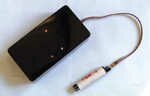
When designing an instrument capable of detecting the output of devices like the Mood PICker, the first consideration is which type of sensor should be used to actually detect the field. The obvious type is an inductive device such as a coil. The disadvantage of coils is that they respond not to the absolute strength of the surrounding magnetic field, but to its rate of change, making them relatively insensitive to very low frequency fields.
A Hall Effect sensor might be more suitable, as these produce outputs proportional to absolute field strength, but most are relatively insensitive and/or expensive.
A third type of sensor that can be used is the Fluxgate Magnetometer. These also measure absolute field strength, and are renowned for their very high sensitivity. Their construction used to be complex and difficult, but a ready-built sensor of this type is now available at reasonable cost. This allows experimenters to venture into the area of weak magnetic field detection far more easily, as is described in this project, which is so sensitive that it can detect moving magnets at five meters through brick walls!
More details on this construction project can be found in the August 1999 issue of EPE Online, the world's first web-delivered electronics and computing hobbyist magazine.
PURCHASE this issue or peruse more Projects